Resilient Australia should be the new Snowy Mountains scheme

snowyIt is my sincere hope that the future of our nation could be secured by making the most of some specific features of our society. Australia is an amazing land. In a mere two centuries we have come to be regarded, and in many ways envied, world-wide. Hard work and good fortune have combined to make us what we are today.

However, in this rapidly advancing world, we are now facing a host of new challenges. It would not be the first time, and through the trials we sometimes had to face head on, we grew more confident and mature. Our maturity is marked by a larger sense of our own place in the world and the vulnerabilities we share with fellow nations beyond our regional boundaries. Australia is no longer a faraway country; it is well and truly positioned as part of the global mosaic.

Over the past decade or so I have been involved in managing response and recovery from some of the largest natural disasters in our history. Living in Brisbane, I have been involved in events like Cyclone Larry in 2006 and the Queensland floods in 2010/11. Over this period I have focused most of my energy on developing disaster resilience programs. Some have been nationally recognised and a number have attracted interest internationally.

As the issue of resilience is increasingly raised as one of the defining factors that all societies must engage with, I believe that Australia should look at developing a ‘nation building’ resilience program. I am well aware of the existing National Strategy for Disaster Resilience that was adopted quickly after Cyclone Yasi and revised earlier in 2015. However, I am also aware of the shortcomings of that strategy as it does not embrace what I consider to be a much bigger picture.

In one way or another, the achievements of past decades can be traced to the cultural, symbolic and hard economic impacts of the Snowy Mountains and similar schemes. Hard infrastructure was the fitting answer for the economy of those times. Undoubtedly, infrastructure projects will continue to play their part, but today when we face an economy of a different kind: ideas, knowledge and creativity – we need a response of a similar scale.

Resilient Australia should be the new Snowy Mountains scheme. The iconic engineering project that brought people from over 30 countries produced vast benefits for Australia. The scheme in itself made Australia more resilient to droughts and unlocked the social and economic potential of the nation. We should look to it for inspiration for the future. I want to underscore this point: we should build resilience in response to not only natural disasters but also to a host of other disruptions. Resilience at all levels of society, from children and families to communities, businesses, cities and regions, encompasses psychological, cultural, ecological, business, infrastructure and cyber resilience. Synchronising them into one format needs to be the focus.

Research already shows that we are going to face massive disruptions, including the nature of our work, social changes, technological changes, geo-political changes, and many more. As has been noted over several years, resilience is much more than the ability to recover from a disruptive event. Real resilience is about the ability to continue to grow and prosper despite ongoing setbacks. Resilience is the new competition.

Perhaps this argument is best explored by Dr Judith Rodin, President of the Rockefeller Foundation, in her recent work The Resilience Dividend – a book I would strongly recommend to every single Australian.

I think our government/s should do more to make a stronger link between resilience and economic investment. This is the moment for Australia to shape its prosperity by focusing on the resilience of its people, community, business, infrastructure, education and health, cities and regions. It is only a matter of time before we face global competition which will be defined primarily by our degree of resilience. There is an opportunity here to stimulate our future in a way that will be one of our most defining features in the first half of this century.

Obsession with resilience definition won’t go away

define resilience

Often times when someone mentions resilience, a common question comes up: how do you define resilience? Well it’s fair to say that no watertight definition exists. Having said that, most people have a fairly good sense of what we mean by resilience. Here are 12 definitions to clarify.


  • “The ability of communities to continue to function when exposed to hazards and to adapt to changes rather than returning to the original pre-disaster state. – Productivity Commission (Australia), 2015″


  • “Resilience is the ability to prepare for and adapt to changing conditions and withstand and recover rapidly from disruptions…[it] includes the ability to withstand and recover from deliberate attacks, accidents, or naturally oc- curring threats or incidents.” Having accurate information and analysis about risk is essential to achieving resilience. Resilient infrastructure assets, systems, and networks must also be robust, agile, and adaptable. Mitigation, response, and recovery activities contribute to strengthening critical infrastructure resilience. – National Infrastructure Plan, Homeland Security, USA.”


  • “Resilience is realized when a disruption is unfolding or cannot be avoided. It is the system’s potential for adaptive action in the future when information varies, conditions change, or new kinds of events (even external shocks) occur.” – Jan Erik Karlsen and Rosalind M.O. Pritchard, “Resilience – The Ability to Change” in Resilient Universities: Confronting Changes in a Challenging World.”


  • “Resilience is the ability to fully engage in life, recover from challenges, and, as a result, increase the capacity to thrive in the future. As crucial a skill as resilience is for individuals, its impact absolutely translates to the collective: when your work culture actively promotes thriving through times of adversity, the outcome will be better communication, increased productivity and a more engaged workforce.” – Dr. Hal Levine, Chief Medical Officer, ValueOptions.”


  • “Resilience is the increasingly critical ability to “anticipate change, heal when breached, and have the ability to reorganize … to maintain [a] core purpose, even under radically changed circumstances.” – Andrew Zolli”


  • “Resilience is a weird thing,” Schneier told Fortune in a phone interview earlier this week. “You can’t buy resilience like you can buy a firewall. It’s an emergent property.” – Privacy and security guru and “Data and Goliath” author Bruce Schneier.”


  • “Resilience is the ability of a system to cope with change and to respond to a disturbance by resisting damage and recovering quickly. By Philipp Gassner | Special to the Business Mirror”


  • “Resilience is the capacity to withstand stress and catastrophe.”


  • “Resilience is the long-term capacity of a system to deal with change and continue to develop. For an ecosystem such as a forest, this can involve dealing with storms, fires and pollution, while for a society it involves an ability to deal with political uncertainty or natural disasters in a way that is sustainable in the long-term., Stockholm Resilience Centre”


  • “Resilience is realized when a disruption is unfolding or cannot be avoided. It is the system’s potential for adaptive action in the future when information varies, conditions change, or new kinds of events (even external shocks) occur.” Jan Erik Karlsen and Rosalind M.O. Pritchard, “Resilience – The Ability to Change” in Resilient Universities: Confronting Changes in a Challenging World.”


  • “ULI (Urban Land Institute) defines resilience as “the ability to prepare and plan for, absorb, recover from, and more successfully adapt to adverse events.” This definition was approved by ULI and organizations representing 750,000 industry professionals in the land use, planning, and development fields, including the American Institute of Architects, the American Planning Association, and the U.S. Green Building Council. This definition is part of a statement that also affirms that “the promotion of resilience will improve the economic competitiveness of the United States.”


  • “Resilience is about getting ahead of change so that you can survive and thrive.” (Fiorella Iannuzzelli, Director and enterprise resilience lead, PricewaterhouseCoopers)


Reimagining Resilience Speaker Series: ‘leading the conversation on resilience’

Sydney_8_December

EVENT DETAILS

Date:                         8 December 2015 (Tuesday)

Time:                         11:00pm – 1:00pm

Venue:                      University of Technology Sydney, Sydney

Booking:                   Essential (tickets are limited) via Eventbrite

Refreshments:          Light Lunch provided


Why Reimagining Resilience

Disruptions are not new. But in our hyper-connected world, disruptions have acquired a new relevance; they’re now a key feature of our lives. Some disruptions immediately trigger a recovery process. Others trigger more adaptive processes.

Natural disasters generate a special kind of disruption. The disruption associated with a natural disaster lasts longer. Recovery can take more than 10 years. There may be several disasters that ‘roll over’, one on top of the other, as seen recently in Nepal when a second damaging earthquake was experienced only days after the first.

Oftentimes disruptions can come from multiple sources/events and can form an entangled web of complex circumstances which may include a combination of natural disaster as well as human induced such as cyber-attack on a business or other institutions.

Natural disasters increasingly tend to have a knock-on effect that reaches far beyond the area of immediate impact. The damage to nuclear power plants from the Fukushima tsunami in March 2013 resulted in an impact far beyond the tsunami itself. This type of disruption renders traditional notions of disaster management almost irrelevant. In a world where there are on average 2-3 disasters per day, this is particularly important.

Disruption is the new normal. Cultivating our resilience will give towns, cities, countries, businesses, indeed all of us, the edge to survive and more importantly prosper in a world dominated by the unknown and the improbable. Now is the time to extend our discourse on disasters beyond Prevention, Preparedness, Response and Recovery, to Resilience. Resilience has increasingly proven to be the best possible answer to the relentless level of disruption brought on by natural disasters.

Why the Speaker Series

The Global Resilience Collaborative has created a platform for trans-disciplinary dialogue, learning and innovation that will lead to new ways of thinking about resilience.  The GRC firmly believes in the power of conversation; particularly the kind of conversation where every participant is a valued contributor. Lived experience, knowledge, ideas, information, relationships all matter. The initiative is designed to create conditions for trans-disciplinary dialogue, learning and innovation that will lead to new ways of thinking about resilience. Our hope is that new ideas will lead to new solutions and projects and programs that will make resilience a genuine value.

With that in mind the Global Resilience Collaborative in collaboration with University of Technology Sydney (UTS) invites you to listen to diverse practitioners and get involved in this transformative conversation. The collaborative style of the series has been carefully modelled to ensure knowledge and ideas can add value to any professional wanting to make their work better informed by the resilience driver.

Confirmed Speakers

Michael Jerks

Michael_JerksAssistant Secretary, Critical Infrastructure and Protective Security Policy

National Security Resilience Policy Division, Attorney-General’s Department

As an Assistant Secretary in the Attorney-General’s Department, Michael Jerks is responsible for leading the Australian Government’s approach to two significant policy areas: critical infrastructure resilience and protective security policy. Prior to his appointment as Assistant Secretary in September 2008, Michael was Director of Major Projects in Critical Infrastructure Protection. In this role Michael was responsible for establishing and managing the Critical Infrastructure Program for Modelling and Analysis (CIPMA) and the Computer Network Vulnerability Assessment (CNVA) program. Before joining the Attorney-General’s Department in 2003, Michael spent nine years as a Senior Manager in the NSW Department of State and Regional Development, and four years as Director of the Standing Committee on State Development, NSW Parliament. Michael holds a Bachelor of Arts from Macquarie University and a Master of Public Policy from the University of Sydney.


Dr Asif Gill

Asif Gill is a Certified Enterprise Architect and Senior Lecturer at the School of Software at the University of Technology, Sydney. He specialises in adaptive and resilient enterprise architecture design and implementation. He is result-oriented and experienced author, coach, consultant, educator, researcher, speaker, trainer and thought leader. He is author of a number of academic and industry IT articles including a recent book on “Adaptive Cloud Enterprise Architecture”. He has extensive experience in both agile, non-agile, cloud and non-cloud complex private and public government environments, displaying a deep appreciation of their different perspectives in a number of commercial projects.


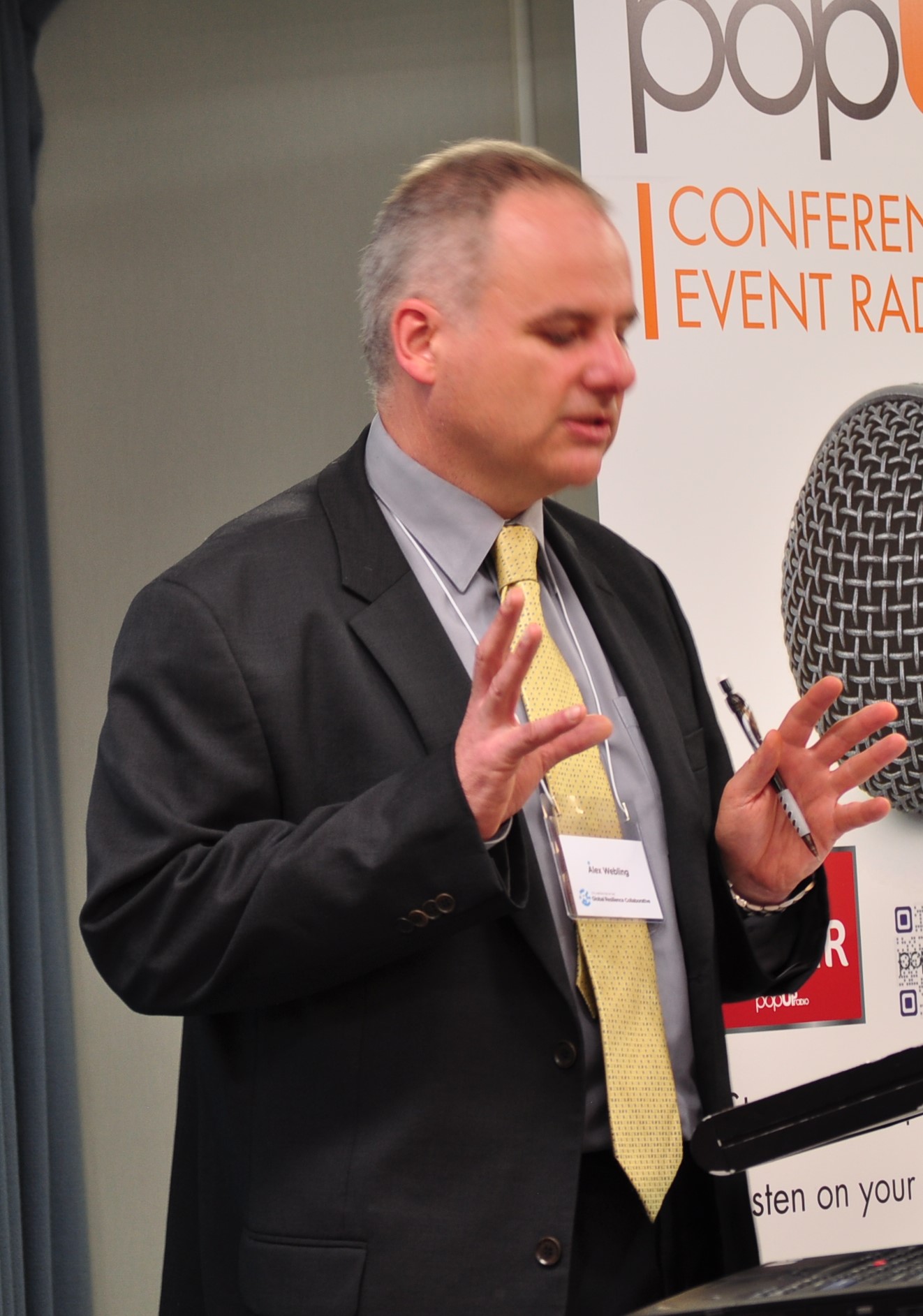
Alex Webling

Alex Webling, BSc, BA (Hons), Gdip Comms, GdipEd, ZOP, AARPI.

Alex is deputy chair of Security Professionals Australasia, a Director of Security Professionals Australasia, a member of the Standards Australia Board on Security (MB-025) and Associate of the Australian Risk Policy Institute. He is a registered security professional in the area of Enterprise Security

Alex has been Director Resilience Outcomes Pty Ltd since 2012. Resilience Outcomes is a consultancy specialising in organisational strategy and resilience, identity and information security.

Alex was a senior executive in the Australian Federal Government in national security. He was the foundation Director of the Australian Government computer emergency response team; Developed the Chemicals of Security Concern program; and was Head of Protective Security Policy responsible for launching the revised Protective Security Policy Framework (PSPF) and the single information classification system for the Australian Government.


Dr Zoran Milosevic
ZoranDr Zoran Milosevic is a specialist IT architect, with skills in enterprise and solution architecture, information architecture, process and policy modelling and real-time analytics. Zoran has worked in a wide variety of complex environments spanning consulting, services, research, standardization and software development. He is renowned for his steady persistence and ability to innovate, motivate, collaborate and deliver.

Dr Milosevic has been involved in a number of large and complex interoperability projects including NEHTA Interoperability Framework and the US NCI Semantic Interoperability project. He has an active role in HL7 standards, serving as a member of HL7 Architecture Board and having led the HL7 SOA Ontology project, involving colleagues from Kaiser Permanente, Infoway Canada and DHS Victoria.


Cai Kjaer

CaiCai Kjaer holds a Master of Law and is a partner/co-founder of Optimice, Australia’s leading Social Network Analysis consulting company. He is an expert in mapping, visualising and improving business relationships using Social Network Analysis as the core diagnostic tool. He has worked with government, private and not-for-profit sectors on projects in Australia and overseas using visualisation techniques to uncover hidden relationship patterns and then develop practical plans to improve these. He has extensive experience in senior consulting, change leadership and implementation roles successfully delivering large scale global projects and business transformations.

Mr Kjaer has been the driving force and lead designer behind:

  • ONA Surveys, a global leading online survey tool for collecting and processing relationship data for visualisation purposes
  • Community Mapper, a community-building social networks tool
  • Company Mapper, an interactive map of the Australian Stock Exchange (ASX) board room connections
  • Web Mapper, an interactive and dynamic platform for displaying relationship patterns and a core component of Optimice’s service delivery capability.


David Kricker, Reserve Bank of Australia


Facilitator

Jelenko Dragisic

Jelenko is a collaboration strategist and disaster resilience planner. As founder of ROADMENDER, Australia’s first of its kind initiative solely dedicated to the promotion and development of collaboration as a discipline in its own right, Jelenko advocates a view that future enterprises will be critically dependent on their collaborative strategy. The formation of Global Resilience Collaborative (GRC) was borne out of years of observation and analysis that clearly identifies that resilience in a systematic manner is not possible without a collaborative approach involving a broad range of disciplines.

Jelenko has extensive experience across the private, public and not for profit sectors, having has worked in a variety of management roles in organisations such as Australian Red Cross, Griffith University and Volunteering Qld. While CEO of Volunteering Qld, Jelenko designed and implemented Step Up, one of the largest disaster resilience programs in Australia. This award winning program is based on large-scale collaboration, bringing together various levels of government, community organisations, universities and the corporate sector. A significant part of the program was dedicated to Australia’s first resilience building initiative for the business sector.

Jelenko is also founder/editor of ResilienceReporter.com, a seven-day a week resilience news, analysis and resource portal focusing on making resilience a recognisable topic for the general population.


Resilient cities -Expanding urban agriculture with collaboration (workshop)

A collaboration between ROADMENDER,Cityfood Growers, Lendlease, Global Resilience Collaborative and Foodconnect will result in an unique workshop focusing on city resilience, urban agriculture and collaboration.

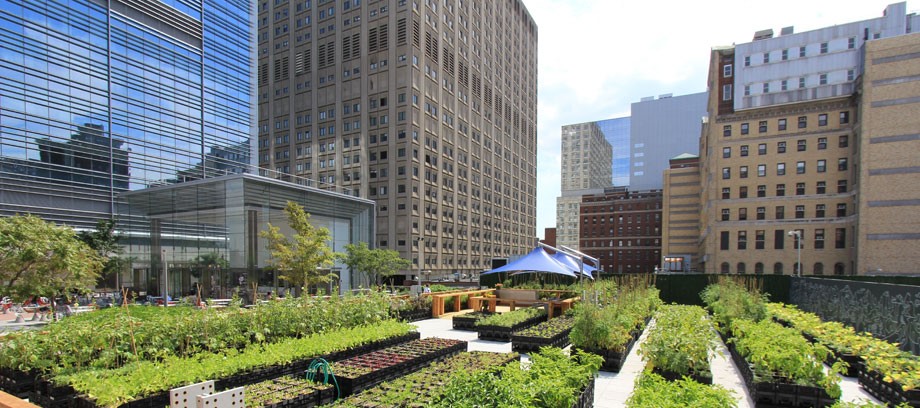
urban ag

Following is an excerpt from the workshop brief:

“Food is a major source of content for prime time TV entertainment. Viewer ratings suggest people love food, love watching food being prepared and love watching it being discussed by chefs and food critics. The popularity of food is not surprising. What may surprise many is that food security is now considered the top concern for global insurance companies. In a recent report Lloyds of London stated that food insecurity is currently the leading cause for concern for virtually every branch of commerce.

It is within this context that the increasing focus on resilience in business, local community, city and society as a whole makes sense to professionals across disciplines.   Along with risk exposure managers and actuaries, it is also the policy makers, economists, politicians, urban planners, architects, researchers, entrepreneurs, health professionals and many others who are seeking to better understand how to integrate emerging data and knowledge to inform their own practice.

Maintaining the relevance of current practice in any of the above fields is largely dependent on how well disruptions, such as factors causing concern for food insecurity, are likely to shape drivers for each profession. Urban planners for instance may find that their work is becoming a keystone for the social, economic and environmental resilience on which our entire society is built.

One of the key facets of a resilient system, such as a business or a city, is its capacity to adapt to disruptive forces. Similarly, built redundancies are an essential factor for a resilient entity. And this is what the emergence of urban agriculture is about: responding to disruption to our way of life by innovating new ways of food production and consumption.”

For more about the workshop follow the link:

https://weteachme.com/cityfoodgrowers/1010082-resilient-cities-expanding-urban-agriculture-with-collaboration


How should political leaders behave when natural disaster strikes?

Natural disasters are in the news a lot. Given that we know that on average there are at least two disasters every single day, and that roughly every two weeks disasters involve major evacuations of over 100 000 people, it makes one wonder whether we really pay enough attention to them. The agencies whose core business is disaster response and recovery are busy and often too tired to focus on raising awareness. I have always been particularly intrigued by the way politicians (amongst which there are also genuine leaders) behave in the face of natural disasters. After all, politicians can make a significant impact on raising issues such as resilience to natural disasters. How much interest they have in doing so is a moot point. So, I took a good look at what they tend to do and if there’s a lesson in their behaviour that could make one major thing a priority: disaster resilience!

I would go as far as to argue that political culture is the single biggest obstacle facing Australia and many other nations worldwide right now in terms of our ability to respond to the ongoing disruptions caused by natural disasters and also of ensuring that economic losses are reigned in and recovery is not as protracted. Not the political system as such, but the actual culture surrounding the way political leaders behave.

A good politician will, in most cases, follow the Rockefeller creed: never let a good crisis go to waste. But the diet of PR is addictive. It is also a tricky one to control. When a natural disaster takes place, politicians caught napping pay a high price. Some are ridiculed for years. US President George Bush continues to be a source of satire years after Hurricane Katrina. While he suffered a slump in approval ratings, he is also remembered for his reluctance to set foot in New Orleans after the disaster, preferring, rather, to stay on vacation. This incident even became part of the television drama Treme. Others hear the anger from the public but still ignore it. The Malaysian president famously continued to play golf with President Obama while Malaysians were dealing with one of their largest floods in history. Equally impressive was the failure of the leadership in Myanmar following Cyclone Nargis in 2008, when Senior Gen. Than Shwe refused to allow international aid or media into the country in hope of hiding the devastation and lack of government action. And earlier this year, following the most intense cyclone in the southern Pacific, Cyclone Pam, the President of Vanuatu left his country to attend an overseas conference.

The way politicians behave when a natural disaster strikes is the subject of serious research. As Carnegie Mellon Prof John T Gasper points out, ‘a good performance during a disaster can lead to a significant boost in public approval and actually change outcomes at the ballot box’. So it is not surprising that many politicians actually do well following a natural disaster. Perhaps the most famous example is the former New York Mayor Rudolf Giuliani following the September 11 terrorist attacks. Mayor Giuliani’s leadership became a global benchmark for aspiring politicians. Another example is Chris Christy, Republican Governor of New Jersey, who famously ignored the political divide and embraced a good relationship with Democrat President Obama, and showed strong leadership in the aftermath of Hurricane Sandy in 2012.

In Australia, we’ve seen pollies learn fast from the mistakes of others. Following the south east Queensland floods in 2011, Queensland Premier Anna Bligh gave an emotional speech in which she fought back tears. Every political leader in the country seems to have jumped on that and every disaster that has affected Australia since has been consistent in one way: a quick reaction by political leaders delivering emotion laden speeches to the public. It is now customary for Australian political leaders to get into it before the actual disaster is over. In April this year NSW Premier Mike Baird was on television urging people to head home to avoid being caught in the storm which was to hit Sydney. Premier Baird was active on social media (Twitter) ensuring his strongest possible presence.

The world over, politicians have either done really well, really badly or fallen somewhere in between. Some politicians lose serious political capital after a natural disaster. For instance, Kathleen Blanco, the Democrat Governor of Louisiana when Hurricane Katrina hit, saw her 70% approval rating before the event fall to 31% within several months. In Japan, Japan’s Prime Minster Naoto Kan resigned only five months after the devastating Fukushima disaster in March 2011, due to pressure which was largely based on criticism of his poor handling of the disaster. ,. Others, however, seem to have learnt some lessons and are far more responsive. Just a few days ago Indonesian President Joko Widodo decided to cut short his visit to the USA and return home to deal with massive forest fires which were causing a major health crisis in his country.

Regardless, whatever their choices have been, these leader have influenced (and continue to influence) what people think of resilience. In fact, I think it’s fair to say that to a significant portion of people, the concept of resilience is only as clear as what their political leaders manage to put out in the simplest of terms. And that is where things become convoluted. Resilience is a very complicated thing and while it can be expressed in a slogan of sorts, real resilience can’t be built unless people grasp the essential fact that we are dealing with a complex problem. Almost everyone can memorise the most famous scientific formula in the words penned by Albert Einstein; E=MC2, but directly proportionately, not too many can actually explain it.

Basically I think that when politicians seek to gain political capital through something which may or may not be a legitimate target for them, we are left unsure whether it is good for the public, especially in relation to resilience. Political entrepreneurialism, plain populism or opportunisms? Hard to tell from a distance, but when better examined one question emerges: is leadership by politicians translating into resilient outcomes measured by better systems, readiness, and changed behaviour by the public? Or, is it simply good politicking and great television?


Note by the author (Jelenko Dragisic):  

The above article is part of my ongoing private research looking at the role of political leadership in developing disaster resilience.

Hurricane Patricia SPECIAL COVERAGE

The strongest hurricane ever recorded has set another record.  Fortunately, the damage it caused was not catastrophic.  However, the past 10-15 years has been marked with a number of record breaking natural disasters where the impact has been catastrophic.  Resilience to such levels of destruction is slowly gaining momentum which is an encouraging sign.  In the wake of Hurricane Patricia, the GRC has prepared this collection of articles from a variety of sources.

This image was captured nearly 1 million miles from Earth at 4:00 p.m. EDT (19:00:18 GMT), on Oct. 22, 2015.

This image was captured nearly 1 million miles from Earth at 4:00 p.m. EDT (19:00:18 GMT), on Oct. 22, 2015.

Why Hurricane Patricia Didn’t Cause Epic Damage

Hurricane Patricia—the strongest hurricane ever recorded—made landfall on Friday without causing the catastrophic damage that many had anticipated. That lack of destruction is in large part due to the storm’s record winds staying confined to a small area and hitting a relatively unpopulated region. “The amount of damage is going to be entirely dependent on where the storm hits,” said Sean Sublette, a meteorologist at Climate Central. “If it had been a more heavily populated area, we’d be having a much different conversation.” The storm made landfall near Cuixmala, a luxury retreat in a sparsely populated ocean reserve, early Friday evening with winds of around 165 miles per hour. But the storm’s strongest winds didn’t extend much beyond 15 miles of its eye. The nearest city Manzanillo, which has a population of more than 100,000, is located more than 50 miles away…FULL STORY


Hurricane Patricia: how one Puerta Vallarta resident stuck out the storm

My home in Puerta Vallarta is an apartment one block from the ocean, behind several beachfront mansions. Because it’s around 40 feet off the ground, I decided to stay. Yes, I took precautions, of course. I had a fanny pack with cash, ID, cell phone, crank flashlight/radio, and my camera. I had bottled water to drink, bananas, a bunch of cold cuts and a loaf of bread. I stockpiled several gallons of fresh water, candles, and a first-aid kit…FULL STORY


Hurricane Patricia strikes: How natural disasters affect travel

Hurricane Patricia, the strongest hurricane ever recorded in the Western Hemisphere, slammed into the southwest Mexican coast on Friday with winds of up to 200 miles per hour. The storm’s sheer power makes it “uncharted territory,” as meteorologist Jim Cantore of the Weather Channel said on Twitter. But complicating matters is its popular location: U.S. State Department officials estimate that tens of thousands of Americans may be living or traveling in Patricia’s path at such resort spots as Puerto Vallarta. Natural disasters can wreak havoc on travelers in many ways, from the emotional letdown of a peaceful getaway being ruined to urgent safety concerns. While Hurricane Patricia is historic, a guide for how travelers can respond to it can be found in past disasters, such as the destructive earthquake that hit Nepal in April…FULL STORY


Terrifying, Eerily Beautiful Photos Taken From Space Of Hurricane Patricia


Reimagining Resilience Speaker Series

Reimagining_Resilience_poster_image

Disruptions are not new. But in our hyper-connected world, disruptions have acquired a new relevance; they’re now a key feature of our lives. Some disruptions immediately trigger a recovery process. Others trigger more adaptive processes.

The Global Resilience Collaborative is launching a new initiative designed to create conditions for trans-disciplinary dialogue, learning and innovation that will lead to new ways of thinking about resilience.

For more information fill out the below form

Go back

Your message has been sent

Warning
Warning
Warning
Warning

Warning.


How Natural Disasters Harm the Poor More Than the Rich

strandedThe following piece by Columbia Professor John Mutter, author of The Disaster Profiteers: How Natural Disasters Make the Rich Richer and the Poor Even Poorer, and published in Slate is really highly recommended reading for anyone interested in the diverse range of factors impacting on the way natural disasters are managed.


By John Mutter

Adolph Hitler visited Paris just once, in June 1940, in an entourage that included his architect, Albert Speer, and Arno Becker, the official state sculptor. He saw all the usual tourist spots, stopping to look around landmark buildings and monuments. He came just a week or so after the army of the Third Reich had occupied the city, a Paris that was by then all but empty of Parisians. But in the anxious weeks after the fall of the French army, most people hadn’t known whether they should leave or stay. Some had even wanted to believe the Germans would not come to Paris at all.

At the height of the crisis in New Orleans there were three times the number of men in uniform there as there were German troops in Paris

A few people had no doubt what lay ahead. They were the elite of Paris, and they left immediately after their army failed. They took their best possessions, stuffed them into limousines, and sped south with their chauffeurs at the wheel. Why did they leave? The most obvious reason is that they had the most to lose. But elite status also brings, or comes by way of, connections at the highest levels of government and military. So those at the top of society knew what was coming and knew to get out fast. Others were left to do what they thought made the most sense, with only rumor and fear to guide them…READ ON


John Mutter is a professor at Columbia University jointly appointed in the Department of Earth and Environmental Sciences and in the School of International and Public Affairs. He is a fellow of the American Association for the Advancement of Science. His new book is The Disaster Profiteers: How Natural Disasters Make the Rich Richer and the Poor Even Poorer.

Remembering Katrina: State of Resilience 10 years on

by Jelenko Dragisic

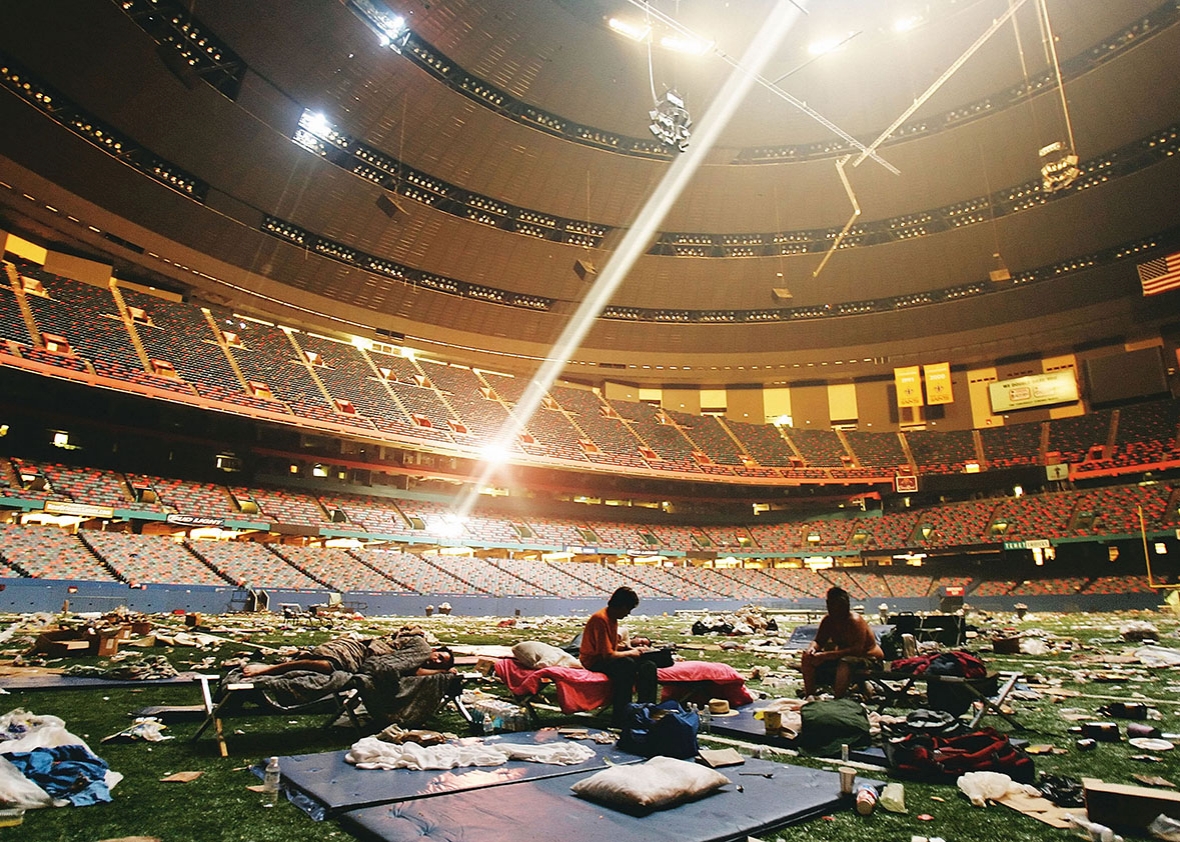
Looking back, it is clear that Hurricane Katrina was one of the most intense natural disasters ever. Its devastation was horrific and lasting. But Katrina was not a surprise, unexpected, nor a ‘black swan’ event. Katrina was the fifth hurricane of the 2005 Atlantic hurricane season. Subsequent and numerous analyses and reports showed that failure to take the likely event seriously years, and even decades, before it took place proved to be the real disaster.

Since then we have seen many other events that have caught us by surprise. Maybe this is as good as it gets with us humans. We make a bit of noise when things go wrong, make a lot of plans and promises, and then go straight back to old habits. This is not the first time I’ve thought this. Here in Australia, the situation does not seem to be radically better. Right now, not a single major newspaper, or mainstream outlet is talking about disaster resilience. We are waiting for the season to start to begin thinking about it and if something big happens, well then it’ll be the hot topic.

Getting prepared for a disaster is not a two week or a month-long exercise. It is the way we should live. It is the way we should behave every single day of the year. Being resilient in the face of major natural disasters is not something that should be turned on and off like a water tap. It’s should be a permanent state of mind; one that is only possible when we act knowing that catastrophic disasters will happen; if not directly to us, then certainly to someone else in the society in which we live. Therefore we are likely to feel the disruption one way or another.

On the eve of its 10th anniversary, Katrina is still strongly present in the minds of many. Some of the affected are likely to still be restoring life as they once knew it. But the good thing is that many have learnt something and in the process have become resilient. Lessons from Katrina are critical and in so many ways unique. They teach us the importance of having a realistic response and recovery plan, the role of political leadership, the importance of inclusive communities, the critical decision-making skills that impact on long term planning of a good city, and many more.

I thought it would be appropriate to pay homage to the people who suffered through the ordeal and who are today reflecting on this enormous event. For that reason I have selected a handful of articles which reflect on Katrina. First up, and my favourite, is Walter Percy’s article about the reflection of Walter Isaacson, Chief Executive of the Aspen Institute who also was vice chairman of the Louisiana Recovery Authority after Katrina, and his interesting take on how humans change during hurricanes. For a more in depth look at the city today, the Washington Post’s article proclaiming New Orleans as a ‘resilient lab’, is a must.


Walker Percy’s Theory of Hurricanes

Walker Percy had a theory about hurricanes. “Though science taught that good environments were better than bad environments, it appeared to him that the opposite was the case,” he wrote of Will Barrett, the semi-autobiographical title character of his second novel, “The Last Gentleman.” “Take hurricanes, for example, certainly a bad environment if ever there was one. It was his impression that not just he but other people felt better in hurricanes.” Percy was a medical doctor who didn’t practice and a Catholic who did, which equipped him to embark on a search for how we mortals fit into the cosmos. Our reaction to hurricanes was a clue, he believed, which is why leading up to the 10th anniversary of Katrina, it’s worth taking note not only of his classic first novel, “The Moviegoer,” but also of his theory of hurricanes as developed in…Read on


What Katrina left behind: New Orleans’ uneven recovery and unending divisions

Ronald Lewis finds it hard to believe it is 10 years since the water came, even though the newspaper clippings he hoarded in a scrapbook and pinned to a wall are yellowed now by age. The horrors in those decade-old stories cannot seem like distant history to anyone who lives in the Lower Ninth Ward, as Lewis does. This is where the flood rose 14ft and the partial, capricious nature of the recovery is obvious to day-trippers, never mind lifelong residents. Lewis returned, like many of his friends, but the Lower Ninth is still a section of New Orleans defined by absence. The neighbours who died or never came back. The stores and services that no longer exist. Those who had no savings or were unable to negotiate the labyrinthine insurance and compensation processes and were submerged by bureaucracy…Read on


A ‘resilience lab’

On the “sliver by the river,” that stretch of precious high ground snug against the Mississippi, tech companies sprout in gleaming towers, swelling with 20-somethings from New England or the Plains who saw the floods only in pictures. A new $1 billion medical center rises downtown, tourism has rebounded, the music and restaurant scenes are sizzling, and the economy has been buoyed by billions of federal dollars. Above: The “sliver by the river” — seen across the Mississippi from Algiers, foreground – has become a hive of activity since Katrina. Farther out, the picture is more mixed in the city’s lower-lying neighborhoods. The next Big One: New Orleans has built the infrastructure to protect itself from hurricanes, but can it win the battle against rising seas? A decade into the Katrina diaspora: Where some of those affected by the hurricane stood in the months after the disaster, and where they stand now. The city is now swaddled in 133 miles of sturdier levees and floodwalls, and it boasts of the world’s biggest drainage pumping station. But on the porch stoops of this place so fascinated by and so comfortable with the cycles of death and decay, they still talk about living in some kind of Atlantis-in-waiting. As if the cradle of jazz might still slip beneath the sea…Read on


5 Topics for…Hurricane Katrina Anniversary

Hurricane Katrina made landfall nearly 10 years ago. The deadly storm killed approximately 1,800 people, displaced more than 400,000 residents and cost billions in property damage. The effects of the natural disaster are still felt in the areas hardest hit, including parts of Florida, Louisiana, Alabama and Mississippi. Speaking nearly 10 years ago from New Orleans, President George W. Bush described Katrina as a “cruel and wasteful storm.” “In the aftermath, we have seen fellow citizens left stunned and uprooted, searching for loved ones, and grieving for the dead, and looking for meaning in a tragedy that seems so blind and random,” Bush said in 2005. “We’ve also witnessed the kind of desperation no citizen of this great and generous nation should ever have to know—fellow Americans calling out for food and water, vulnerable people left at the mercy of criminals who had no mercy, and the bodies of the dead lying uncovered and untended in the street.”…Read on


How my goat lived through Katrina – and became a New Orleans celebrity

New Orleans icon Chauncey Gardner passed away quietly of old age on 20 February 2015, at his home in Algiers, New Orleans. As local residents will attest, Chauncey was a genuine participant in many music and arts communities throughout his 10 years of life. Chauncey went quickly and peacefully, his owners at his side. Born on Rosedale Farms in 2004, Chauncey was bottle-raised and lived in a Ninth Ward backyard for nine years. Not long after his birth, Chauncey traversed the country in our car while evacuating after hurricane Katrina. The whole month we remained locked out of New Orleans, Chauncey dictated our lives in Texas, where we found refuge. We ended up living for a month on a Houston goat farm after Chauncey urinated on my mother’s beloved mauve carpeting in Conroe, Texas, which led to an argument wherein she kicked us all out. While on the farm, Chauncey was attacked by a dog, which I wrote about in my temporary position as a staff writer for the Houston Press. At the time, I was being offered everything I’d ever wanted as a writer, simply because of Katrina. Literary agents fought over a book I’d half-written about evacuating with Chauncey. I finally chose the agent who got me published in Newsweek, but America tired of Katrina books before he could sell mine…Read on


100 Resilient Cities Challenge: The Last Round or Applications NOW OPEN

100 Resilient Cities—Pioneered by the Rockefeller Foundation (100RC) is dedicated to helping cities around the world become more resilient to the physical, social and economic challenges that are a growing part of the 21st century.

Brisbane City: GRC Hopes that the city can step up and join the global network of leaders ensuring a different path for the local economic and social prosperity.

Brisbane City: GRC Hopes that the city can step up and join the global network of leaders ensuring a different path for the local economic and social prosperity.

The 100 Resilient Cities Challenge seeks to find 100 cities that are ready to build resilience to the social, economic, and physical challenges that cities face in an increasingly urbanized world. Is your city ready to become resilient?

We can’t predict the next disruption or catastrophe. But we can control how we respond to these challenges. We can adapt to the shocks and stresses of our world and transform them into opportunities for growth. If your city applies for the 100 Resilient Cities Challenge, it could be one of 100 cities eligible to receive funding to hire a Chief Resilience Officer, assistance in developing a resilience strategy, access to a platform of innovative private and public sector tools to help design and implement that strategy, and membership in the 100 Resilient Cities Network.

The deadline to apply is November 24, 2015. Ignite the urban resilience movement.

Apply Here…