Make resilience a business asset

By Dr Rose Gantner.

Dr Gantner is a wellness consultant based in USA and a member of Global Resilience Collaborative.


Most people want meaningful and enriched lives for themselves and significant others. Why is this so hard to accomplish and blend together in one’s personal life, the workplace, and the community? Or, how do individual employee habits, attitudes, beliefs, skills, motivation, and values align with the organization’s goals to form a mutual partnership of trust and higher morale so individuals, teams, and companies grow and benefit emotionally and financially?

Once people know the ”why” and “what “ of resilience and positive psychology components, they will be able to learn the “how” to achieve their present and future goals, make the best out of any stressful situation, and become stronger and more emotionally agile, with a clear focus on their immediate choices and the potential consequences.

Human capital is an important investment. Equally important is psychological capital1, the positive resources of efficacy, hope, optimism, and resilience. These resources may be the key to helping employees move from less stress to more energy and to improving the workplace culture fit with the employee’s skills, knowledge, and attitudes. The progression should move towards talent optimization, training, and retaining high performers with high resilience. Research supports that highly resilient leaders are more successful, creative, and innovative and display more emotional stability, strength, honor, and integrity when faced with adversity.2

Evidence shows that resilience and the emerging field of organizational behavior, along with positive organizational scholarship, can improve engagement, performance, and productivity; increase individual’s cognitive flexibility to adapt to change with a calm assertiveness, and encourage striving towards success and personal accountability.3..READ ON…
Reputational risk and resiliency: The branding of security in place-making

By Dr Peter Rogers and Dr Jon Coaffee

This paper on reputational risk and resilience by Dr Peter Rogers and Dr Jon Coaffee was first published in 2008 and it is now kindly shared by our collaborator. Dr Rogers is Co-Director of Climate Futures at Macquarie University and a member of the Global Resilience Collaborative.

In light of new international security challenges and the ongoing terrorist threat, the need for places to adopt security and resiliency measures to retain reputation has increased. This paper uses the concept of ‘reputational risk’ to argue that security is becoming one of many key selling points in the practice of city branding. We highlight how aspects of security and emergency preparedness are increasingly becoming affiliated with branding practices and utilised by governance regimes to promote and brand particular locales as safe, secure and resilient to attack. Utilising both historical and contemporary examples from UK cities, we argue that security and resilience is quickly becoming another tool in the armoury of place branders at local, regional and national levels, and emerges as a factor in the attraction of inward investment and conference-led or ‘meetings’ tourism and in the evolution of post-industrial cities…READ ON

Building the Lucky Country; Positioning for prosperity? Catching the next wave

By Jelenko Dragisic


I still have notes I wrote back in early 2008, just after returning from managing a disaster evacuation centre in Central Queensland. One of the standout points in these notes was my realisation that we have the cutting edge potential to lead the world in disaster resilience building. This timely report by DELOITTE captures a key argument that is one of the major drivers of the Global Resilience Collaborative. The full report can be found here, however the part of most relevance is reprinted in full bellow.


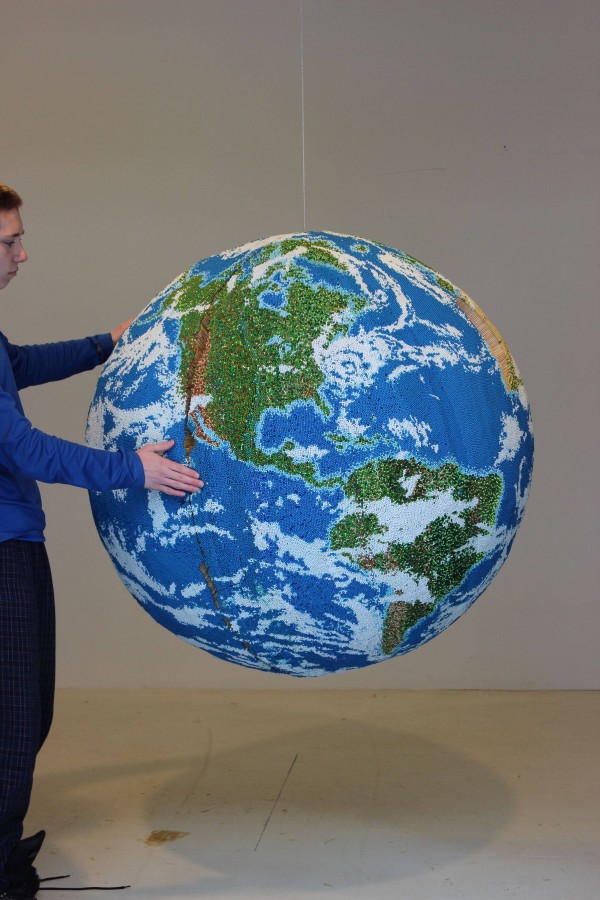
NYC based artist Andy Yoder spent 2 years recreating the satellite images of the Earth during Hurricane Sandy. He hand-painted each of the matchsticks to achieve the perfect pigment, then glued them one-by one to a frame made of foam and cardboard inside a plywood skeleton.

NYC based artist Andy Yoder spent 2 years recreating the satellite images of the Earth during Hurricane Sandy. He hand-painted each of the matchsticks to achieve the perfect pigment, then glued them one-by one to a frame made of foam and cardboard inside a plywood skeleton.

Australians are actively putting themselves in harm’s way by moving to warmer and lower-lying parts of our continent. We cannot ignore the fact that our population (and our built environment) will be increasingly concentrated in areas of greater risk. We also know that, generally speaking, prevention costs an order of magnitude less than repair.

That alone is projected to lead to the economic costs of natural disasters doubling by mid-century. Accordingly, responding better to disasters – and preventing them – will be vital to Australia and Australians in the decades to come.

This will include raising the walls of dams to cut the chance of damaging floods, clearing scrub near homes and putting power lines underground. According to the Australian Business Roundtable for Disaster Resilience and Safer Communities, the right steps could save the Australian Government up to $12 billion a year in natural disaster relief and recovery costs by 2050. So these initiatives don’t just make good sense, they are also business opportunities.

Moreover, although most of the markets will be domestic, Australia is also well positioned to sell skills and services into global markets. In part, that is because the world is seeing similar trends to Australia, with increased population in low-lying warm climates – a classic risk combination for natural disasters.

Australian know-how can lead the world in these developing markets, with a focus on prevention (preparedness, including identifying risks and acting on them) and cure (management, including dealing with the aftermath of disasters). Indeed, the United Nations has described Australia as a world leader in disaster risk reduction and in 2012 it made the Australian Capital Territory a role model city in its global Making Cities Resilient campaign.

Strengthening Global Collaboration to Support Urban Resilience

Nine institutions including the World Bank and the Global Facility for Disaster Reduction and Recovery (GFDRR) announced a new global collaboration at the World Urban Forum in Medellin, Colombia, expressing their collective commitment to help cities improve resilience to disaster and climate risks, as well as to economic and other systemic shocks.


“This collaboration across organizations is a significant step towards facilitating the flow of additional financing to cities and ultimately ensuring that shocks to the urban system don’t undermine decades of economic growth and prosperity,” said Sameh Wahba, acting director of the World Bank’s Urban Development and Resilience Department.

Strengthened collaboration among partners – UN Human Settlements Programme (UN-Habitat), UN Office for Disaster Risk Reduction (UNISDR), Inter-American Development Bank, the Rockefeller Foundation, and its 100 Resilient Cities Centennial Challenge, the C40 Cities Climate Leadership Group, and ICLEI Local Governments for Sustainability, in addition to the Bank and GFDRR – aims to improve the flow of knowledge and financial resources necessary to help cities become more resilient by:

• Fostering harmonization of the multiple approaches and tools available to help cities build their resilience;

• Catalyzing access to innovative finance mechanisms, including risk-based instruments that will enhance cities’ ability to reduce exposure and vulnerability to shocks and stresses and increase their adaptive capacity; and

• Supporting capacity development of cities to achieve their goals by facilitating direct sharing of best practice information and cities’ knowledge enhancement.

Collectively, these organizations work in over 2,000 cities globally, with over $2 billion committed annually toward advancing resilient urban development.

This collaboration across organizations is a significant step towards facilitating the flow of additional financing to cities and ultimately ensuring that shocks to the urban system don’t undermine decades of economic growth and prosperity. Close Quotes

The partnership will also mobilize support for the post-2015 urban resilience agenda, including the Sustainable Development Goals, the climate change framework and the Hyogo Framework for Action, and the Habitat III agenda.

In a rapidly urbanizing world, people and assets are increasingly concentrated in cities, becoming highly dependent on infrastructure networks, communication systems, supply chains and utility connections. While this enables cities to drive prosperity, disruptions caused by natural disasters, the impacts of climate change, as well as a broad range of shocks – economic, health epidemics, conflict or social upheaval – can have a catastrophic effect on a city’s ability to deliver basic services, hurting the lives of urban residents, especially the poor and vulnerable.

At the World Urban Forum, the World Bank joined partners in a discussion on the increasing importance of improving urban resilience, and the need to move beyond conventional approaches through enhanced collaboration.

Commenting on the partnership, Deputy Mayor of Barcelona, Antonio Vives, said: “Speaking on behalf of the City of Barcelona, which shares a relationship with all of these organizations; we welcome the establishment of this partnership. The collaboration will provide more coherence, collate more resources, and offer more options to cities around the world to find the most appropriate means to measure, monitor, and increase their resilience.”

Source: http://www.worldbank.org/en/news/feature/2014/04/15/stengthening-global-collaboration-for-urban-resilience

European Commission adopts Communication on The Post 2015 Hyogo Framework for Action: Managing Risks to achieve Resilience

4Today the European Commission lays out its primary vision on how the European Union should contribute to the global efforts to reduce the impact of disasters. The Commission has adopted a Communication on The Post 2015 Hyogo Framework for Action: Managing Risks to achieve Resilience. This document is the basis for upcoming discussions between the Member States, the European Parliament and other stakeholders who will work on a common EU position for the global negotiations at the level of the United Nations. These talks will focus on how to mitigate the impact of natural and man-made disasters and to build a new framework for disaster risk reduction – the so-called post 2015 Hyogo Framework for Action.

During recent years, disasters are increasing both in frequency and intensity and this trend is likely to continue. All countries are vulnerable: developing countries suffer a greater loss of life while developed nations bear higher economic costs. In the EU alone natural disasters have caused more than 80 000 deaths and €95 billion in economic losses during the last decade.

To address these alarming trends, prevention and risk management policies are essential. A renewed post-2015 Hyogo Framework for Action is a significant opportunity to advance disaster risk management across the world.

The European Commission has built the recommendations based upon the past achievements in disaster risk management of a range of EU policies including civil protection, environmental protection, internal security, climate change adaptation, health, research and innovation and external action. These achievements are an important EU contribution towards building a coherent policy on disaster risk management at European and international levels.


What is the Hyogo Framework for Action?

The Hyogo Framework for Action (HFA) “Building the resilience of nations and communities to disasters” is a 10-year plan adopted by 168 UN Member States who voluntarily committed to work on five priorities for action with the objective of making the world safer from natural hazards and to build disaster resilience. Adopted in 2005, the HFA will expire in 2015. A wide consultation process is taking place on shaping the post-2015 framework for disaster risk reduction.


What are the key proposals of the Commission?

1. More transparency and better governance of the new post 2015 Hyogo framework for Action

The European Commission suggests governance standards, periodic peer reviews and the collection and sharing of globally comparable data on disaster losses and hazards.

2. Focus on results

The European Commission proposes the introduction of targets and measurable actions to reduce disaster risks.

3. Disaster risk reduction measures should contribute to sustainable and smart growth

All major infrastructure and projects should be risk-sensitive and climate-and-disaster-resilient.

Innovative technologies and instruments to support disaster management should be further encouraged (early-warning systems, resilient infrastructure and buildings, green infrastructure, risk communication etc) in order to lead to increased business opportunities and contribute to green growth.

4. Special attention to the most vulnerable

The Commission also expects the new Hyogo Framework for Action to be more gender-sensitive and to target vulnerable groups such as children, elderly people, persons with disabilities, the homeless and the poor. Particular attention should be paid to building resilience in all urban and vulnerable rural settings, as well as in coastal areas…Read full text…

Multi-disciplinary collaboration during Cyclone Sandy: FEMA and Frog design consultancy example

In late October of 2012, as Hurricane Sandy was bearing down on the eastern seaboard, some important members of the Federal Emergency Management Agency were toying with an idea that was a little bit unusual, at least for members of a government agency in the midst of a huge disaster. They were wondering if designers could help.

As part of the “Field Innovation Team,” Frog and others brought a new perspective to disaster relief. Image: Frog

As part of the “Field Innovation Team,” Frog and others brought a new perspective to disaster relief. Image: Frog

That’s how the design consultancy Frog was tapped to become part of FEMA’s Field Innovation Team, a group that brought an unlikely mix of minds into the Sandy recovery process, including experts in fields ranging from art and science to mathematics, technology, and design. According to Desi Matel-Anderson, who served as FEMA’s Chief Innovation Adviser during the period, convening this sort of team and putting them to work during a crisis was not the usual way of doing business. “I don’t know of any time in history where a federal agency like FEMA has tasked a team to innovate in a disaster and to solve in real time like this on the scale that we did,” she told me after her stint at FEMA had wrapped up late last year. “This fundamentally shifted the ideological underpinnings of an entire field.”

By the time FEMA reached out to Frog, a number of employees from the company’s New York office were already on the ground, volunteering their time at Disaster Recovery Centers, or DRCs, throughout the area. Through that exposure and official visits to other recovery centers in subsequent weeks, Frog’s designers got a first-hand look at how disaster recovery worked–and, sometimes, how it didn’t.

Over the several months that followed, Frog and the other members of the Field Innovation Team looked at those Disaster Recovery Centers through the lens of design, drawing up a series of proposals for improving the experience. In January of last year, the team travelled to the White House to present its vision to FEMA representatives and the Secretary of Homeland Security. It was well received. The agency has already put a number of the easiest fixes, like color coded signage, in place, and it’s continuing to refine its operation in light of Frog’s findings.

Government agencies are like large ships in that changing course can be a slow, gradual process. But according to Rich Serino, FEMA’s Deputy Administrator, the agency is indeed looking at things differently in light of the Innovation Team’s work. “They saw things that perhaps we hadn’t seen before,” he told me. “They’ve literally changed the way we do business.”

It’s an ongoing process, but it all started with FEMA going against conventional wisdom. Instead of trying to drum up some new thinking through workshops or simulations, it brought a fresh set of eyes to a disaster as it was happening. That bold decision gave designers a chance to see how FEMA works in the real world, in real time…READ ON

Resilient Cities 2014 congress: Resilient Cities March Update

“Resilient Cities 2014 - Annual Global Forum on Urban Resilience and Adaptation” will be taking place from 29 to 31 May 2014 in Bonn, Germany.

“Resilient Cities 2014 – Annual Global Forum on Urban Resilience and Adaptation” will be taking place from 29 to 31 May 2014 in Bonn, Germany.

Find the updated program overview on our webpage, including information on:

•High-level speakers

•Cities representing their work

•Sessions on various key themes

•Co-patrons supporting the congress

Find the updated program overview….

Secrets of resilient companies (An article by Lloyds)

resilience-624x479The key to remaining resilient and keeping brands and reputations intact is responding quickly and appropriately, according to a recent report from Airmic.

Take the Cumbria rail crash in February 2007, which resulted in one death and several injuries. The crash involved a Virgin Trains’ train. Immediately after the crash, Richard Branson cut short a family holiday to visit the scene of the accident and the hospitals treating injured passengers.  Branson praised the efforts of the train driver, calling him a hero, and the strength of the Pendolino train, which he said was “built like a tank”. “He was there showing concern at the highest level and protecting the reputation of the railway company in which Virgin Group owns the majority share,” says Paul Hopkin, technical director of Airmic and one of the authors of Roads to Resilience, a report by Cranfield School of Management on behalf of Airmic.

Roads to Resilience follows on from Roads to Ruin, which was published in 2011. This first report analysed over 20 significant corporate crises of the last decade to trace their deeper causes. Several of the case study companies did not survive and most of the rest suffered severe damage. The new report looks in detail at eight “high reliability” organisations, identifying five related and inter-dependent principles that might help organisations protect their reputation and achieve their goals.

Radar on risk
An effective “risk radar” can help an organisation identify issues before they develop into major incidents. “Resilient organisations will consider what the negative trends are that could damage the reputation of their sector and/or do considerable damage to their competitors,” explains Hopkin. “The next step is then how to respond.”  While the conventional approach to risk management tends to follow a traditional organisational hierarchy, Roads to Resilience advocates have unimpeded communication about risk management throughout an organisation.
Fostering an organisational culture where such information can be readily shared is key to generating the involvement and commitment of all employees, according to the report.

Reputations rely on rapid responses
Resilient organisations are typically able to respond rapidly, notes the Airmic report. They recognise that responding to adverse circumstances is not just about operational recovery or continuity – protection of reputation should be paramount. One example is the InterContinental Hotels Group, which found itself “in the centre of the storm” when the Arab Spring broke out. It immediately went into crisis management mode and even shared its approach with other hotel groups that were adapting to the political unrest. “Reputational risk can arise from almost everything the company does and doesn’t do,” says Dan Trueman, head of cyber insurance at Novae. “It’s not just its actions but its omissions that can affect its reputation in the marketplace.” “Resilience” has become one of the most important concepts in the risk management community, according to Hopkin. It encapsulates an approach which blends enterprise risk management with crisis management. “Resilience is the ability to bounce back and also the ability to roll with the punches,” says Trueman. “The best and most resilient organisations not only think through their risk profiles or the things that could affect them to a greater and lesser extent, but they also plan ad nauseam for when those events happen.

“They carry out business continuity planning,” he adds. “They don’t just pay lip service to it. They practise and train their senior executives for that moment when the CEO is stopped by the media outside his or her front door at 6am in the morning. And if you can think through that in advance of the event actually occurring, that’s where you become resilient.” An increasing number of reputational insurance products are available in the market and are structured as non-physical damage business interruption policies. They are often purchased as add-ons to product or cyber liability insurance, explains Trueman. As well as providing indemnification, insurers can also offer access to crisis management experts. “In the purchase of the insurance product, the assured themselves has built more resilience into their systems, so they’re a better risk profile for us and it’s a multi-win situation,” says Trueman.

For more on this topic see Lloyds website: http://www.lloyds.com/news-and-insight/news-and-features/market-news/industry-news-2014/secrets-of-resilient-companies

Davos 2014 – Building Resilience to Natural Disasters

The devastation caused by extreme weather events consistent with the increased risk of climate change will continue to inflict heavy social and financial costs. How can natural disasters be better anticipated and managed?

Moderated by: Judith Rodin, President, Rockefeller Foundation, USA; Co-Chair of the World Economic Forum Annual Meeting 2014

https://www.youtube.com/watch?feature=player_detailpage&v=7w_p1X5d3AQ


How’s your country doing? Hyogo Framework for Action (HFA)

wecoordinate_hfa

Progress Reports

HFA progress reports assess strategic priorities in the implementation of disaster risk reduction actions and establish baselines on levels of progress achieved in implementing the HFA’s five priorities for action. National reporting processes are led by officially designated HFA focal institutions in country, and regional reporting by regional intergovernmental organizations…