What Resilience Means, and Why It Matters

This article by Andrea Ovans, the senior editor at Harvard Business Review is a must read.  Ms Ovans draws on a range of recent research which makes the slam dunk case for making resilience critical part of any business.  


A small but intriguing new survey by a pair of British consultants confirms the importance of resilience to business success. Resilience was defined by most as the ability to recover from setbacks, adapt well to change, and keep going in the face of adversity. But when Sarah Bond and Gillian Shapiro asked 835 employees from public, private, and nonprofit firms in Britain what was happening in their own lives that required them to draw on those reserves, they didn’t point to tragedies like the London Tube bombings, appalling business mistakes, the need to keep up with the inexorably accelerating pace of change, or the challenges of the still-difficult economy — they pointed to their co-workers…READ ON

Interactive: 100 years of temperatures in Australia

interactive map2014 was Australia’s third-warmest year on record: our interactive map shows how it compares to the past 100 years. See the interactive map here


Disaster Resilience: an emerging class issue?

One evening six years ago I went to meet a small group of locals in a north Brisbane suburb who were affected by an unusual storm. Many remember the event as The Gap storms and I think they are officially known as the Brisbane North storms.

Residents of the area I visited had organised a small gathering, in fact so small I hesitate to use the word ‘gathering’. Nevertheless, the residents had welcomed me to present a small donation to me as the head of a not for profit organisation I had started to assist in disaster response. We were one of a number of organisations that helped people affected by the storm. So far there’s nothing really special about this story. But the twist, for me at least, was some insight I gained during that quiet evening. You see my hosts had preferred to give the donation to someone else. I, or should I say our organisation, was the ‘last cab off the rank’ and these good people had hoped to give the donation to any one of several larger or better known charities who had assisted in this disaster stricken area. I know this because they were honest and explained it to me. They did not mean any disrespect to me or our organisation. It was just the simple fact of their intentions. I was, and still am, comfortable with that. Especially since we put the donation to good use to further develop a service that helps people following disasters.

Now, the main thing about my insight was not the above mentioned circumstance, but another slightly uncomfortable fact they shared with me while we drank coffee in a circle with no table to divide us. They felt forgotten, abandoned and ignored. Their street was not in The Gap, the suburb that was well covered by the mainstream media. They said it themselves; because their street was in a less affluent postcode the silence was deafening. So maybe their donation was an attempt to get their voice heard. They were also affected but it seemed that help was not as forthcoming to them as to their better-off neighbours.

That episode never left me. Over the years I have mentioned it in meetings, discussions and conversations which were all part of the larger narrative of disaster resilience building. I can recall every time that the response was something along the lines of ‘oh well, that’s how it is’. Ever since I have been bothered by one question: are we developing disaster resilience for the whole of society? I have detected a similar undercurrent of what may be benign negligence (discrimination may be a more apt term but I am not willing to admit to it yet) in other parts of the country. I saw signs of it in Central Queensland (Australia) with aboriginal people. I saw similar things in North Queensland in relation to one of the local CALD groups. In all cases the events were different and significant.

Over the years as my work in the area of disaster recovery matured, and even more so in disaster resilience building in a variety of capacities, I noted a semblance of a pattern emerging; a pattern that reflects a genuine lack of understanding as to what resilience really is about. It simply does not work if inclusiveness is not the guiding principle. It does not work because the sense of injustice that a lack of inclusiveness brings can cost the entire enterprise dearly. Resilience needs ‘whole-of-system’ support, be it ecological, social, technological, political or economic. The system and process has to be all encompassing and based on genuine and multifaceted collaboration.

I am convinced that I am not alone in my observations. There must be more people who realise that the past decade has shown that natural disasters tend to impact the disadvantaged slightly more than others who have the means to bear the disruption with more grit and recover to the point where they can continue to grow, flourish and face the future (including future disruptions) with more courage and confidence. The capacity to live in such a way alone has to be the centrepiece of any political or economic platform that is ingrained into the policy and practice of disaster resilience building. Anything short of that is a populist excuse designed to ignore the dangers of social divisions that threaten every society, regardless of their material riches.

About the author:

Self 2Jelenko Dragisic is a resilience planner and collaboration strategist.  Jelenko is currently writing a book on disaster resilience. 

10 natural disasters that shook the world in 2014

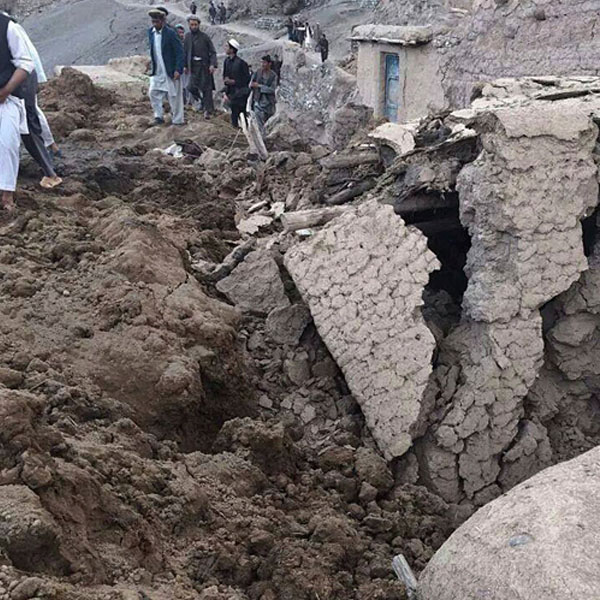
Afghan mudslides

Afghan mudslides

The year 2014 saw several natural disasters around the world, which renewed worries about global warming and related incidents threatening life on our planet. An Oxfam report in November also showed how Asia is highly vulnerable to increasingly severe and frequent weather extremes and woefully underprepared to manage growing crises. Here’s a look back at 10 natural disasters around the world this year…


New cities study offer insight into resilience and competitiveness

TC Ruby in action

TC Ruby in action

A new report by WWF and Bank of the Philippine Islands (BPI) Foundation says that integrating climate vulnerability, socio-economic sensitivity and adaptive capacity into urban planning can help cities become more resilient and businesses more competitive. The Phillippines may have bore the brunt of several extreme weather events such as typhoons and floods in recent years, but this is not an excuse for businesses to stay away from investing in the archipalego. To help policymakers and private sector leaders understand business risks and opportunities in the country “through the climate lens”, the World Wide Fund for Nature (WWF) and Bank of the Philippine Islands (BPI) Foundation have launched a new study that offers a look into the future of 16 major cities. The report titled “Business Risk Assessment and the Management of Climate Impacts”, launched at an event held last month at the Ayala Museum in Makati, is based on existing climate science studies, city-specific socio-economic data and from experiences of local stakeholders. The study is the final installment of a series of reports launched in phases in 2012 and last January…READ ON

Next Round of Resilient Cities!

One of the newly inducted cities.

One of the newly inducted cities.

The amazing and in our view a game changing initiative by the The Rockefeller Foundation has doubled its global network or resilient cities.  Yesterday’s announcement has shown again that the network of cities who understand that the future of their wellbeing is closely tied up the resilience capacity is as diverse and widespread as is the initiative itself.  We congratulate all the cities that have made a effort in right direction.  Below are details from the Rockefeller Foundation team. 


Today we proudly announce the second group of cities selected to join 100 Resilient Cities – cities who have demonstrated a commitment to building their own capacities to navigate the shocks and stresses of an increasingly complex 21st Century. During our first 18 months, we’ve seen our first cohort of cities mature, appoint chief resilience officers, and embark on their own resilience strategy processes. No doubt this momentum contributed to the immense response we saw to the second round of the 100 Resilient Cities Challenge has been enormous, with 331 exceptional applications from cities around the world, submitted in seven languages…READ ON

‘Yasi’ comes to Townsville: a “hypothetical”

ABC Big Ideas’ presenter and producer Paul Barclay shared this interesting initiative by Green Cross Australia.  The idea of a hypothetical scenario which is being discussed by a range of experts and professionals including the Queensland’s Minister for Local Government, Community Recovery and Resilience David Crisafulli.  Global Resilience Collaborative would like to share this with broader public and resilience specialist alike. 


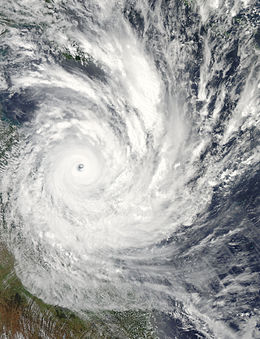
Satellite image of Cyclone Yasi on 2 February near peak intensity.  Image: wikipedia

Satellite image of Cyclone Yasi on 2 February near peak intensity.
Image: wikipedia

It is tropical cyclone season in Australia: the time of year when those in northern Australia are alert to the possibility of potentially devastating cyclones and storm surges. What would happen if a massive cyclone like 2011’s Cyclone Yasi hit Townsville head on? How well prepared is the city? This is a “hypothetical” discussion about building resilience against extreme weather events. While the scenario constructed is entirely made up, history suggests it’s certainly not out of the question…READ ON

Let’s talk about water. Serioulsy

North Sea Flood of 1953 was a game changer...

North Sea Flood of 1953 was a game changer…

The Dutch have been regarded as people who know a thing or two about water.  The third of nation is at the sea level.  The other two are below it.  So, when it comes to managing floods and making the entire country resilient we should all listen the Dutch experts like Henk Ovink.  Global Resilience Collaborative is happy to share this find.


What Henk Ovink Thinks: The Dutch idea-guy ponders Hoboken’s flooding problem

Perched on a stool next to a large window at the downtown Starbucks in Hoboken, Dutch water expert Henk Ovink turns his intense gaze to the sidewalk outside. “Look at the pavement,” he says. “Do you see any capacity to hold water?” Ovink is possibly the Netherlands’ most valued export at the moment. With rising sea levels and booming waterfront development occurring all over the world, his expertise in urban planning in a country built on a river delta is in high demand. Luckily for Hoboken, once an island surrounded by marsh but now filled in and urbanized, Ovink is currently working with the federal government to help the entire New York metropolitan area rethink how to live close to the water. As for Hoboken’s sidewalks, they in fact have no capacity to hold water. The problem is emblematic of the city’s larger water issues, which came to a head during the infamous Hurricane Sandy…


How Typhoon Nuri is changing the weather forecast in North America

Everything is connected.  Everything can seem simple but in fact can be very complex.  The following article we gleaned on Mashable is really interesting.  Apart from interesting science it is also very good insight into the way businesses, communities and cities can start to think about resilience future.

Near-term forecasts of the North Pacific jet stream, showing a stronger, sharper jet stream (red colors indicate stronger winds) across the region on Tuesday and Wednesday.

Near-term forecasts of the North Pacific jet stream, showing a stronger, sharper jet stream (red colors indicate stronger winds) across the region on Tuesday and Wednesday.

Typhoon Nuri, which was one of the two strongest storms on Earth so far this year, is going to help bring another shot of cold, Arctic air to the Midwest and East Coast later this week. That a typhoon near Japan could have a ripple effect on the weather in Detroit and New York just a few days later may be difficult to fathom, but it illustrates the myriad ways in which the world is an interconnected place…

How cities embrace resilience: Minneapolis Has a Plan for the Most Resilient Neighborhood in the Country

We recently learned about a project called “PROSPECT NORTH” which is all about making city of Minneapolis resilient.  If successful the city will be see its citizens thrive.  The article first appeared at Next City. 

cities

For Minneapolis, climate change will most likely lead to wetter, hotter years by mid-century, with annual temperatures rising as much as 5 degrees. Unfortunately, like most cities, its pipes, sewers and even electricity were laid for very different weather. Adapting could require the ability to disconnect from that grid — which is exactly what the planners of one futuristic neighborhood propose to do…read on